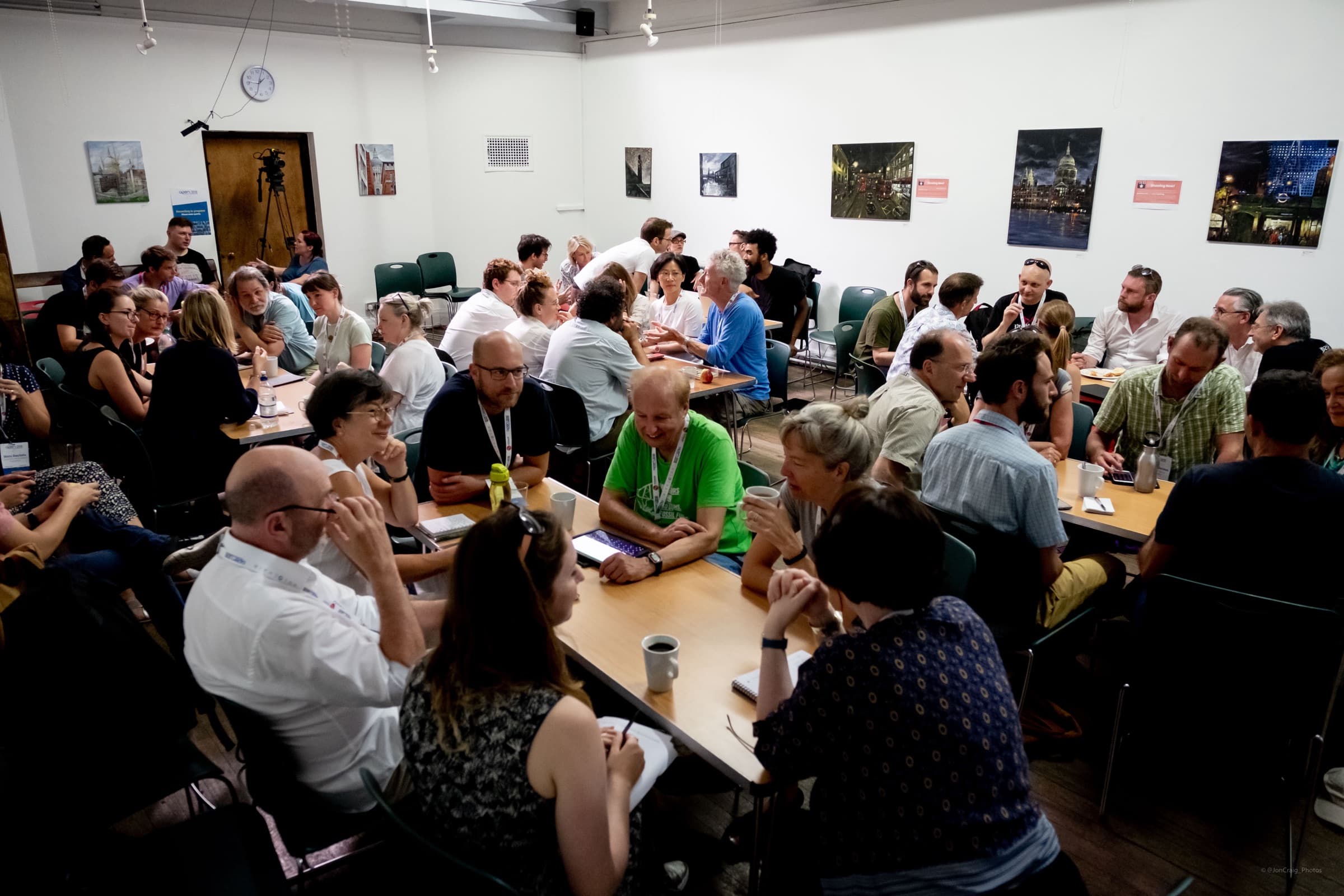
Member networks that build trust.
VT3 helps organisations understand, adopt and benefit from a new generation of trust infrastructure.
We help connect people, data and organisations across boundaries, without locking them into another closed platform.
We advise on strategy, architecture, implementation and hosting, helping your network leverage the internet’s missing ingredient: trust.

The problem
Most networks run on a patchwork of insecure systems. Trust can’t.
Membership databases, mailing lists, chat tools, spreadsheets and shared drives rarely work as a coherent, effective, secure system.
Who’s who?
An account proves someone has a login, but are they a member, a lapsed member, or a bot?
Who controls the data?
Member data gets copied from platform to platform, how can you ensure it’s not leaking?
Can you share safely?
Data either stays locked in silos or gets shared without clear, auditable permissions.
Can you prove it?
How do you know who’s really a member, and that only those entitled to vote get a vote?
What about AI agents?
Before an agent can act for someone, it needs an identity so others can check who it works for.
More disconnected tools won’t fix a system built on foundations you can’t trust.
Trust has to be built into member networks from the ground up.
The solution
A new foundation for how networks work.
Verifiable trust infrastructure makes it possible to establish identities, credentials and permissions that can be checked across systems, networks and organisations.
With the right trust infrastructure in place:
- Members carry proof of who they are and what they’re entitled to, and can reuse it wherever it’s accepted.
- Organisations share data and authority through permissions that are explicit, auditable and revocable.
- Trust can reach across organisations and networks without forcing everyone onto one system.
- Knowledge and connections become easier to find across communities that were disconnected.
- AI agents can prove who they act for and what they’re allowed to do.
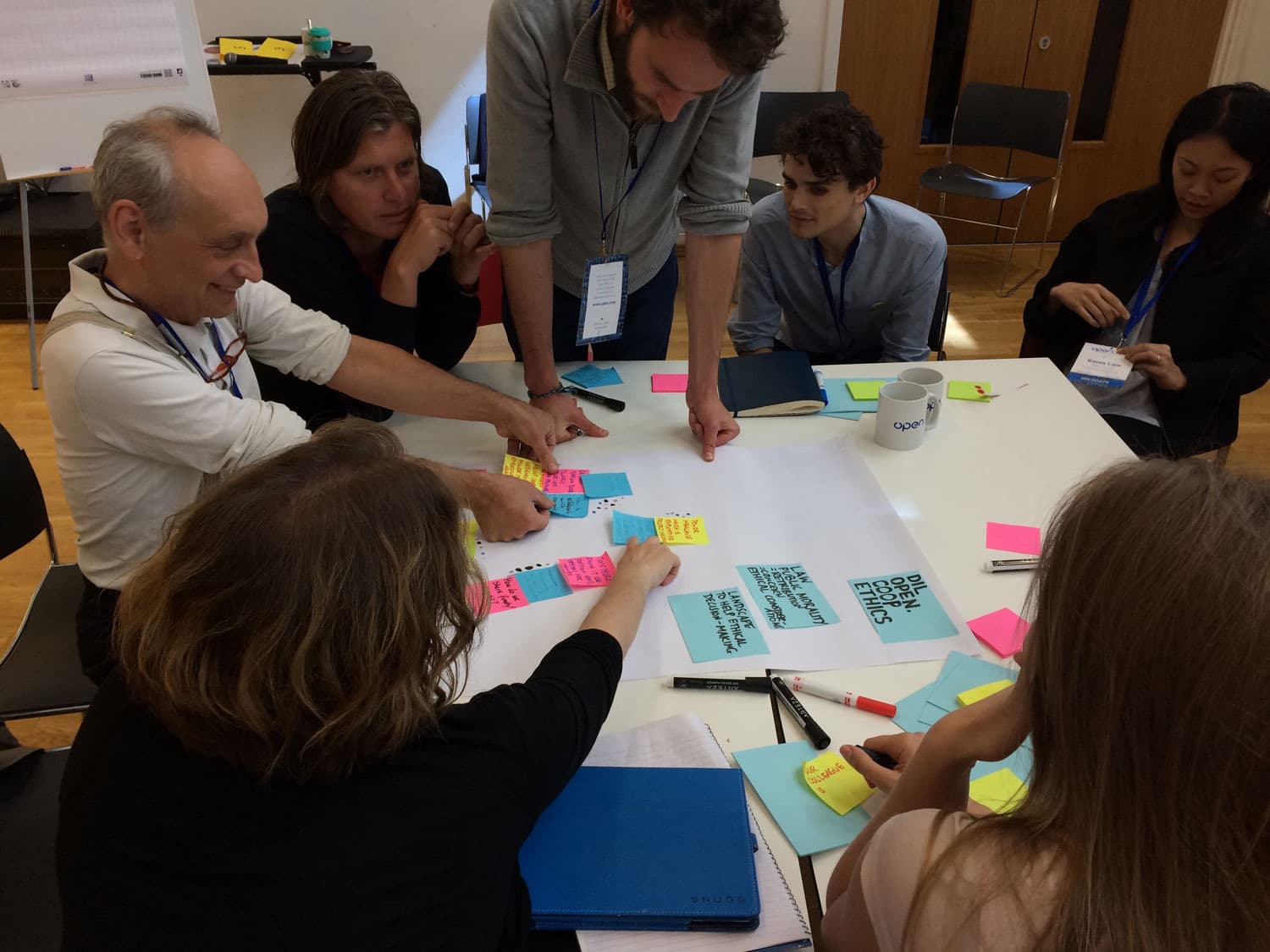
This is about more than better security. It’s about making collaboration easier and more effective across organisational boundaries, while giving people more control over their data and relationships.
How verifiable trust works
Prove what matters. Share only what’s needed.
Verifiable trust starts with identity you own. You, your devices and your AI agents can each have their own digital identity, under your control.
Because they’re linked, others can check that a device or an agent really acts for you, and what it’s allowed to do.
When you join a network, it can issue you a membership credential, and members can vouch for each other, so trust builds from genuine relationships, as it does in the real world.
When a service needs to check your details, you share a proof containing only what’s needed. It can check it without seeing or keeping your personal data, and your credential stays with you.
And access can be withdrawn: revoke a credential and the next check fails.
Members can build up personal history and context, which their AI agents can draw on to help them with their goals.
Members can share selected knowledge with their networks, creating shared knowledge graphs which only other members, and their AI agents, can access.
Networks can recognise each other’s members, so trust can reach across organisations without merging their systems.
Who we work with
Networks where trust matters.
Membership bodies, co-operatives, sector networks and communities that need to know who’s who, share safely and decide together.

Agriculture and food
We help farmers share data on their own terms, combining local experience and trusted records into a growing body of collective knowledge. This can enable meaningful benchmarking, reveal what works in different conditions, and help farmers and researchers improve yields, reduce waste and carbon emissions.

Co-operatives and membership organisations
We help co-operatives verify membership easily, run one-member-one-vote ballots that can be audited, and offer benefits only members can claim. By reducing the burden of checking identities and entitlements, we can help make participation easier and help federations work together without losing their independence.

Research and learning
We help learning networks build trusted, evolving knowledge bases that capture expertise across institutions and communities. With appropriate governance and access controls, AI can help members query this shared knowledge, uncover connections and turn collective experience into useful answers — creating a resource that becomes more valuable as the network grows.

Professional and sector networks
We help professional networks verify credentials, share trusted information and connect expertise across organisational boundaries. Turn scattered knowledge into a collective resource, reduce duplicated effort and make it easier for members to find the right people, evidence and experience when they need them.

Civic and public-interest networks
We help communities, campaigners and public-interest organisations coordinate, share knowledge and make collective decisions without handing control to a single platform. Enable collaboration between independent groups while protecting participants’ privacy, autonomy and ability to set their own rules.
The building blocks
Five everyday tools, built on verifiable trust.
Members
Join, get vouched for, sign in with a tap — your governance rules encoded.
Announce
News and updates that only verified members can receive, without exporting a mailing list each time.
Chat
Secure conversations — from one-to-one messages to working groups across organisations.
Decide
Votes where every vote is a real member’s, results can be audited and ballots stay private.
Knowledge base
Shared memory with private AI that only answers to members.
Start with the blocks you need, and add more as your network grows.
Get ahead of the curve.
We can help you understand what’s emerging, where it creates opportunities for your organisation, and how to act before committing further investment to systems that may soon need rethinking. Early adopters can build valuable capabilities while others are still catching up.
We help forward-thinking networks turn the latest advances in trust infrastructure into new possibilities for collaboration.
What VT3 does
Turn emerging infrastructure into practical advantage.
You don’t need to become an expert in trust protocols to benefit from them. You need to understand what’s possible, where the value lies and how to put the right systems in place.
Strategy and planning
We can help you identify how verifiable trust could transform your membership, data-sharing, governance or learning network — and map out the opportunities, technical requirements and practical steps to get there.
Implementation and integration
We help you move from fragmented tools towards a coherent, open-source architecture. Together, we work out what to replace, what to connect and how to introduce verifiable identities, credentials and permissions into existing workflows.
Hosting and technical support
We can help you set up and operate your own trust network infrastructure, that your own team can run and manage, or act as a host for you.
The technology
Open standards. No unnecessary lock-in.
VT3 leverages and contributes to the OpenVTC ecosystem, built with organisations working at the forefront of decentralised identity, cryptography and open standards.
The ecosystem brings together:
- First Person Project
- Convening the emerging trust infrastructure ecosystem.
- Linux Foundation Decentralized Trust
- Open collaboration around decentralised trust technologies.
- Decentralized Identity Foundation (DIF)
- Advancing open standards and technologies for decentralised identity.
- Trust Over IP (ToIP)
- Home to the working group developing the decentralised trust graph and Verifiable Trust Infrastructure (VTI) specification.
- Affinidi
- Verifiable data and decentralised identity technologies.
- Harvard University
- Through the Applied Social Media Lab at the Berkman Klein Center, which builds the Keyring wallet.
- UC Berkeley Cryptography Research Labs
- Contributing the zero-knowledge proof techniques behind hidden vetting.
- ic3software
- A key OpenVTC contributor, as well as building and maintaining the three VTA Farm repositories.
- Trust Tasks
- An open message format for trust-related interactions.
Together, this work is helping establish the foundations for a more interoperable, privacy-preserving internet where identities, credentials and relationships can be verified across organisational boundaries.
Start a conversation
The time to understand this shift is now.
Trust infrastructure is moving from experiments to practical use. We work with organisations exploring it today, starting with your challenge, not the technology: assessing your current systems, finding valuable uses, and planning hosted or self-managed deployments.
Not everything is production-ready. OpenVTC is still developing, so each component is assessed for maturity, security and suitability.
Talk to us
Frequently asked questions
What is a verifiable trust network?
A network in which identities, credentials, relationships and permissions can be verified using cryptographic proof. Rather than relying exclusively on accounts and assertions held by centralised platforms, participating systems can check the evidence themselves to verify claims, which builds trust.
What is OpenVTC?
OpenVTC is the open-source trust infrastructure initiative that VT3 contributes to. It provides a foundation for developing verifiable trust networks. The project remains under development, so available capabilities and production readiness must be assessed individually.
Is this blockchain?
No, verifiable credentials and decentralised trust architectures do not require a blockchain. Our partners are investigating running truly peer-to-peer and blockchain based trust networks but neither is required to leverage OpenVTC.
Does this mean everyone can see everyone’s data?
No. The objective is to make specific claims and permissions verifiable, not to make personal information or relationship networks public. What is disclosed, who can access it and where it is stored depend on the credential design, applications and governance arrangements.
Can people really own and reuse their data?
People can hold and present credentials independently of a particular service, where the implementation supports this. That does not mean every kind of data is held exclusively by an individual or can be removed from every organisation that has received it. Data rights, copies, retention and deletion remain subject to technical design and applicable law.
Can permissions be revoked?
Systems can support revocation of credentials and withdrawal of access permissions. The effect depends on the mechanism used: revoking access does not automatically erase copies of data already obtained, nor does it undo actions already completed.
How does this work across different organisations?
Organisations can agree which issuers, credentials and verification methods they recognise, and under what conditions. Compatible systems can then verify claims across organisational boundaries without merging their databases. Interoperability requires appropriate standards, schemas, configuration and governance; it isn’t automatic.
Do we need to replace our existing systems?
Not necessarily. A project may involve integrating with existing tools, replacing particular components or introducing new infrastructure alongside current systems. VT3 helps assess the options and the practical route to implementation.
Can VT3 host our network, or can we host it ourselves?
Both. VT3 offers strategy, implementation and hosting, and can help organisations assess self-managed deployments. The available hosting model, operational responsibilities and technical requirements will depend on the specific implementation.
Is the technology production-ready and independently audited?
OpenVTC remains under development, and not all components are complete or independently audited. Readiness and security assurance must be established for each proposed deployment. VT3 will distinguish demonstrated capabilities from planned features and outstanding assurance work.
What does it cost?
Strategy, implementation and hosting have different requirements and costs. We start by understanding your network, its use cases and the systems involved, then agree on an appropriate scope and proposal.
Have a specific challenge? Talk to us.